

Looking for the Magic✨: A Nature Almanac
June 2026 / Beetles Are a Tiny Wonder 🪲

Welcome to Looking for the Magic✨: A Nature Almanac
Issue 14 / June 2026
The most vivid memories of my childhood are of summers in Nebraska. From kindergarten through third grade, I was outside exploring nature and chasing creatures. Each evening, my brothers and I would switch off the backyard porch lights and wait for the fireflies to appear.
One by one, they emerged from the tall grasses of the meadow beyond our home. Tiny lanterns blinking on and off in the darkness, like a secret code. We would race outside and catch them in our cupped hands, holding our breath as their bioluminescent glow slipped through the spaces between our fingers.
Then we would retreat indoors and turn the porch lights back on.
Within minutes, the June bugs would arrive.
They came from every direction, hurling themselves toward the light. Their hard shells clicked against the windows and bounced across the concrete patio like tiny pebbles tossed from the sky. We would shriek with laughter and dare one another to step outside and stand in the middle of the storm.
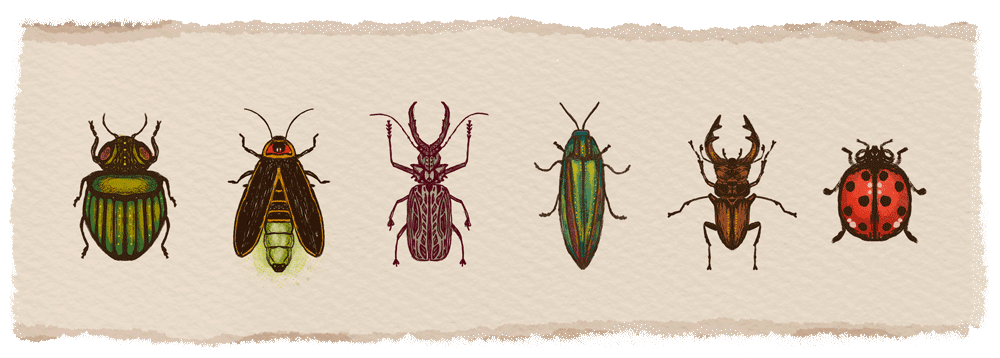
Scientists estimate there are more than 200 million insects for every human on Earth (60-70 million are beetles). Tiny pollinators, recyclers, builders, and caretakers working all around us. Some glow. Some shimmer like gemstones. Some navigate by the stars.
No better time than summer to indulge in some beetle magic.
Things included this month:
Beetles: A Tiny Wonder
The Blue Moon: May 31st (I’m sending this out early so we don’t miss it!)
June Creative Prompts
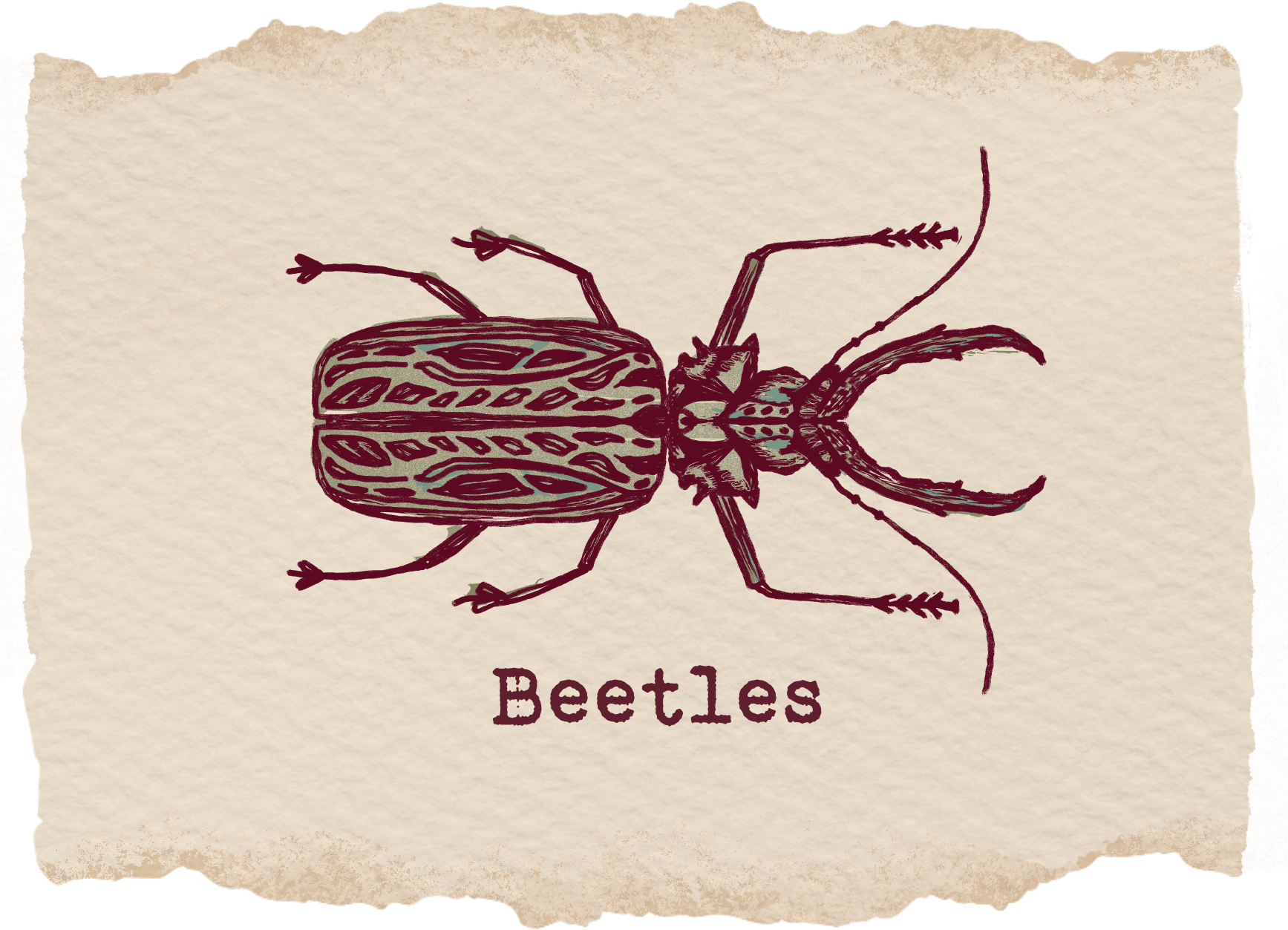
Beetles are tiny armored creatures carrying iridescent shells, glowing lanterns, and ancient symbolism through forests and gardens for over 270 millions years. They are so resilient, they survived the mass extinction that wiped out the dinosaurs.
Beetles account for about 40% off all known insects. They play a big role in our ecosystem breaking down organic matter. They were the very first pollinators - well before a butterfly or bee showed up. They are ancient magical creatures.
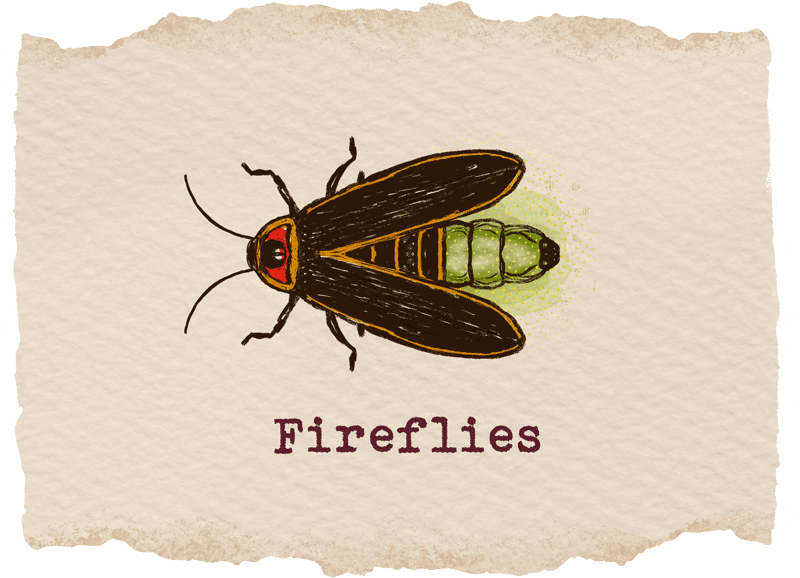
Yes, fireflies (also known as lightning bugs) are actually beetles.
They spend most of their lives hidden beneath leaves or underground as glowing larvae, softly lighting the forest floor at night. Some species even begin glowing as eggs long before they ever take flight. Firefly larvae are often referred to as glowworms.
Did you know that in the 1960s, some companies paid children a penny for every firefly they collected? Scientists harvested compounds called luciferin and luciferase from the insects to study bioluminescence and use it in medical and biological research. Today, these compounds can be produced synthetically, so collecting fireflies is no longer necessary.
As for those mason jars filled with fireflies on summer nights? I don’t know where that tradition began, but it’s hard to imagine a more magical childhood memory.
Some interesting facts:
✧ Their glow is one of the most energy-efficient lights in the world.
✧ Different species blink in unique patterns to attract mates.
✧ In folklore, they were sometimes seen as wandering fairies or spirit lights.
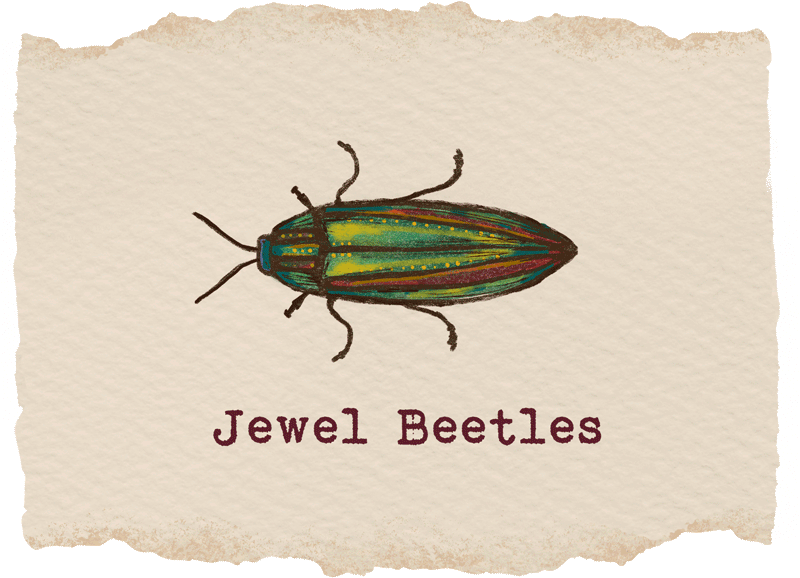
These are the gemstones of the forest. With over 15,500 species, Jewel beetles are one of the largest family of beetles. Their colors change depending on the angle you view them by.
In ancient cultures, including Egypt and parts of Asia, their iridescent wings were sometimes used in jewelry, ceremonial adornments, and embroidery. It’s even said that Cleopatra wore dresses decorated with beetle-wing embroidery that sparkled like jewels in the sun.
The next time you spot a flash of metallic green in the garden, you may be looking at one of nature's smallest treasures – a living gemstone hiding among the leaves.
Some interesting facts:
✧ Their metallic colors come from microscopic structures reflecting light.
✧ Some look emerald, copper, sapphire, or gold.
✧ Today there are ethically sourced insect farms that provide beetles for modern day jewelry makers.
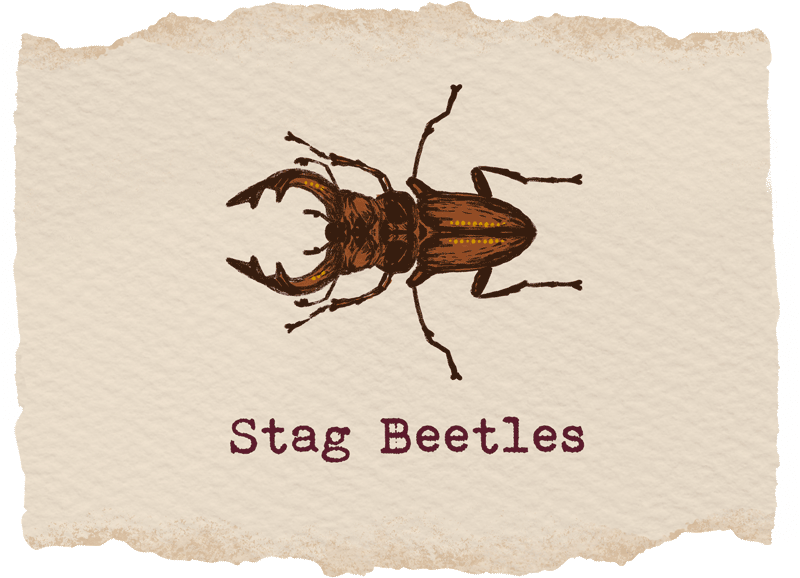
These are the showstoppers of the beetle world.
With their antler-like jaws and prehistoric appearance, stag beetles look as though they wandered out of an ancient fairy tale. Those impressive “antlers” belong to the males, who use them to wrestle rivals in dramatic battles for the chance to mate.
But their most fascinating story happens out of sight.
Stag beetles can spend up to four years underground as larvae, quietly feeding and growing within decaying wood. Then, after years of waiting, they emerge as adults for just a few short weeks. Imagine that – a lifetime spent preparing for a brief moment in the sun.
They remind me that nature doesn’t measure a life by its length, but by its purpose. Sometimes even the briefest appearance can leave a lasting impression.
Some interesting facts:
✧ They help decompose forest debris and return vital nutrients to the soil.
✧ Adult stag beetles and their larvae are an important source of protein for birds, small mammals, and reptiles.
✧ Beetles like stags love rotting wood and lots of fallen folliage to live and breed in. The tidying up of our garden and urbanization has decreased their numbers.
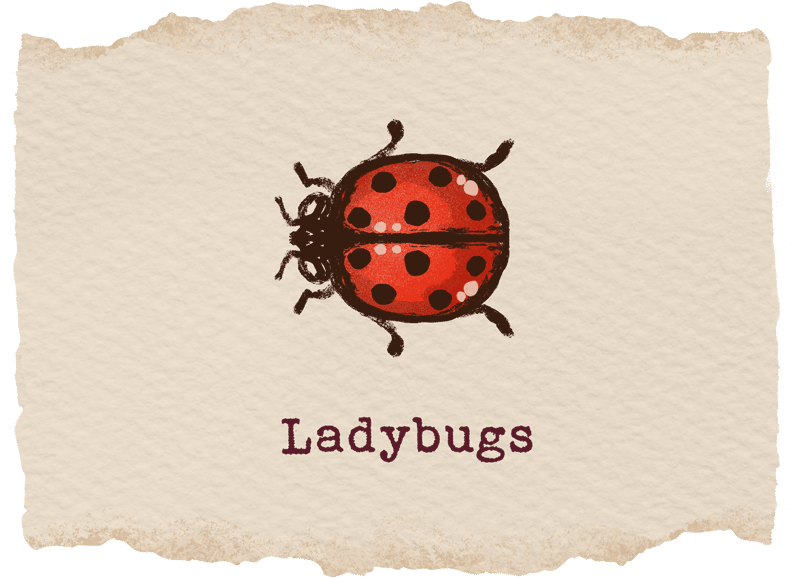
We all love spotting a lady bug. They are pretty much the only bug you squeal in delight when you find one has landed on you - while a stag beetle might elicit a scream. Across many cultures, ladybugs have long been considered symbols of luck, protection, and good fortune.
Their name has roots in the Middle Ages, when European farmers prayed to the Virgin Mary to protect their crops from destructive aphids. When ladybugs arrived and began feasting on the pests, the grateful farmers called them "Our Lady's Beetles." Over time, the name was shortened to ladybird or ladybug. According to folklore, their bright red wings represented the Virgin's cloak, while their black spots symbolized her joys and sorrows.
A single ladybug can eat over 5,000 aphids in a lifetime. They are the original non-toxic way to protect your garden.
Tiny, hard-working, and dressed in polka dots – it’s no wonder they’ve captured our hearts for centuries.
Some interesting facts:
✧ They smell with their feet. Tiny hairs full of receptors can taste and smell.
✧ When threatened, ladybugs can secrete a foul-smelling, yellow, toxic fluid from their leg joints to deter predators.
✧ Their red shell protects them from predators. It gives off toxic vibes.
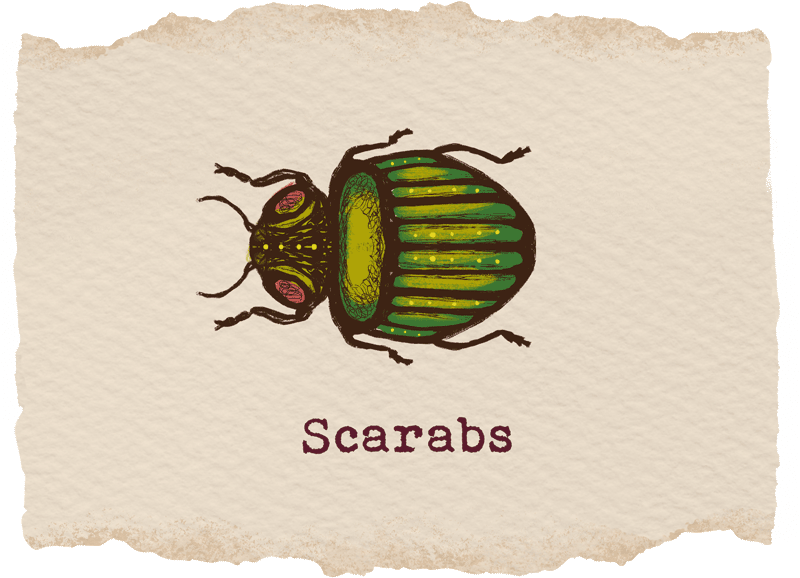
There are more than 35,000 species of scarab beetles in the world, including the familiar June bug. But today, I’d like to make a case for one of their less glamorous relatives: the Dung beetle.
Yes, it is exactly what it sounds like.
Dung beetles spend their days rolling, burying, and recycling animal waste. Not exactly the most glamorous job description. But before you skip this one, they are the only insects known to navigate using the glowing band of the Milky Way. On clear nights, they orient themselves by the stars, rolling their precious cargo across the landscape with surprising precision.
Yes, Dung beetles are guided by the Milky Way.
Ancient Egyptians were equally fascinated by these remarkable beetles. As they watched scarabs roll perfect spheres across the desert sands, it reminded them of the sun’s journey across the sky. They believed the sun god Khepri gently pushed the morning sun into each new day in much the same way. Because of this, the scarab became a sacred symbol of renewal, rebirth, and transformation.
Some interesting facts:
✧ Some dung beetles can pull over 1,000 times their own body weight.
✧ Certain species are surprisingly good parents, protecting food chambers for their larvae underground.
✧ Dung beetles are natural fertilizers in your garden.
☽✶ The full moon names featured each month are rooted in a mix of Native American, Colonial American, and European traditions. In earlier times, these names described the entire lunar month, not only the night when the moon appeared full.☽✶
The Blue Moon will peak on Sunday, May 31st at 1:45 a.m. PST. I wanted to send this newsletter out before June begins, so we could take a moment to reflect on this rare moon together. Earlier this month, we welcomed the Flower Moon in the May edition, but the Blue Moon is too good to let it slip by without a mention.
A Blue Moon only occurs every 2–3 years, when two full moons fall within the same calendar month.
You know that saying, “once in a blue moon”? I’ve said it my entire life without ever really thinking about what it meant. I only knew it pointed to something rare.
The Blue Moon is often seen as a time to pause and reflect. A moment to realign yourself with what truly matters. To release what no longer fits, and step more fully into what does.
This is the kind of moon that asks you to take up space. The kind of space that has always belonged to you. The space where you stop waiting for permission and begin trusting your own inner knowing.
You are not here to shape your life around everyone else’s expectations. You are here to live the life calling gently to you beneath all the noise.
That’s the magic of Blue Moon energy. It reminds us to slow down long enough to listen.
Pay attention to what has been calling you lately. Notice what keeps returning. Notice what makes you come alive. There may be something waiting for you there.
Now you see why I couldn’t leave this moon out of a newsletter. It is quite magical.
And no worries – I’ll be creating a special post this month for the Strawberry Moon later in June.
🔵 The Blue Moon Meditation
The Blue Moon makes no apologies.
It is a moon that asks you to take up space.
It is time to declare what you want for yourself.
It is time to own it.
So here is what you are going to do.
Make a cup of tea. Light a candle. Sit somewhere quiet.
Don’t think too much. We talk ourself out of what we want.
Grab a piece of paper and do what I call, a braindump.
Take five minutes and list exactly what you want.
Don’t figure out how. Or question how it can happen. Just write.
Now fold up that paper. Put it in your pocket.
Go outside and look up at that moon.
Now it is time to declare it to the moon.
We never quite know how we will get there.
Somethings seem impossible.
You don’t have to figure it out yourself.
Somehow, the universe figures it out for you.
And it is usually better than you ever imagined.

✦ The Blue Moon Meditation & Summer Moon Observations
A blue moon only comes around once in a while – don’t miss it. Throughout June, step outside each night and notice the moon. Each phase rests in a slightly different part of the sky. Nothing about it is ever quite the same. It’s a simple, magical way to end the day.
✦ World Ocean Day / June 8th
In celebration of World Ocean Day, celebrate the sea! Do you live near the ocean? Do you have a local aquarium? And if you can’t get there in person, sink into a documentary like anything by David Attenborough or My Octopus Teacher (one of my absolute favorites). I love these quiet summer movie nights with family. Afterward, make something inspired by the sea.
✦ Summertime Magic
Summer has a way of slipping by in a blink. That’s why it helps to create small rituals to anchor it. Summer is where memories are made. the long light-filled days ask us to live a little more fully inside them. Create new rituals. Maybe it’s a weekly backyard picnic with your family. Maybe it’s a monthly beach day. Or maybe it’s just waking early, drinking coffee in the garden, watching the blooms open with the morning light. It doesn’t need to be big. It just needs to be yours.
Until Next Time✨🌙
Kim
P.S. If you enjoyed this, please give it a like or share it with another. It helps others discover it as well. 🤗
I'm feeling so thankful to have come across your Instagram account while looking up some zodiac inspired artwork. You are so talented! Everything you create is as beautiful as the next piece! Albeit cliche, but completely applicable, your work is like a breath of fresh air! I am more than happy to be a monthly subscriber here and plan to share your account with others so they can enjoy your work as much as I have.
I love love love this article you wrote every month! Always lights me up when I see a new one!